Phase 1 · Monitor

Indoor air quality monitoring in Dubai and across the UAE

We install professional sensors that measure your air every minute, then turn the data into clear reports and alerts. It is Phase 1 of every HawaQ project: measure first, so any solution is based on facts.

Kaiterra, Atmocube and AirthingsLive dashboards and alertsBMS integration

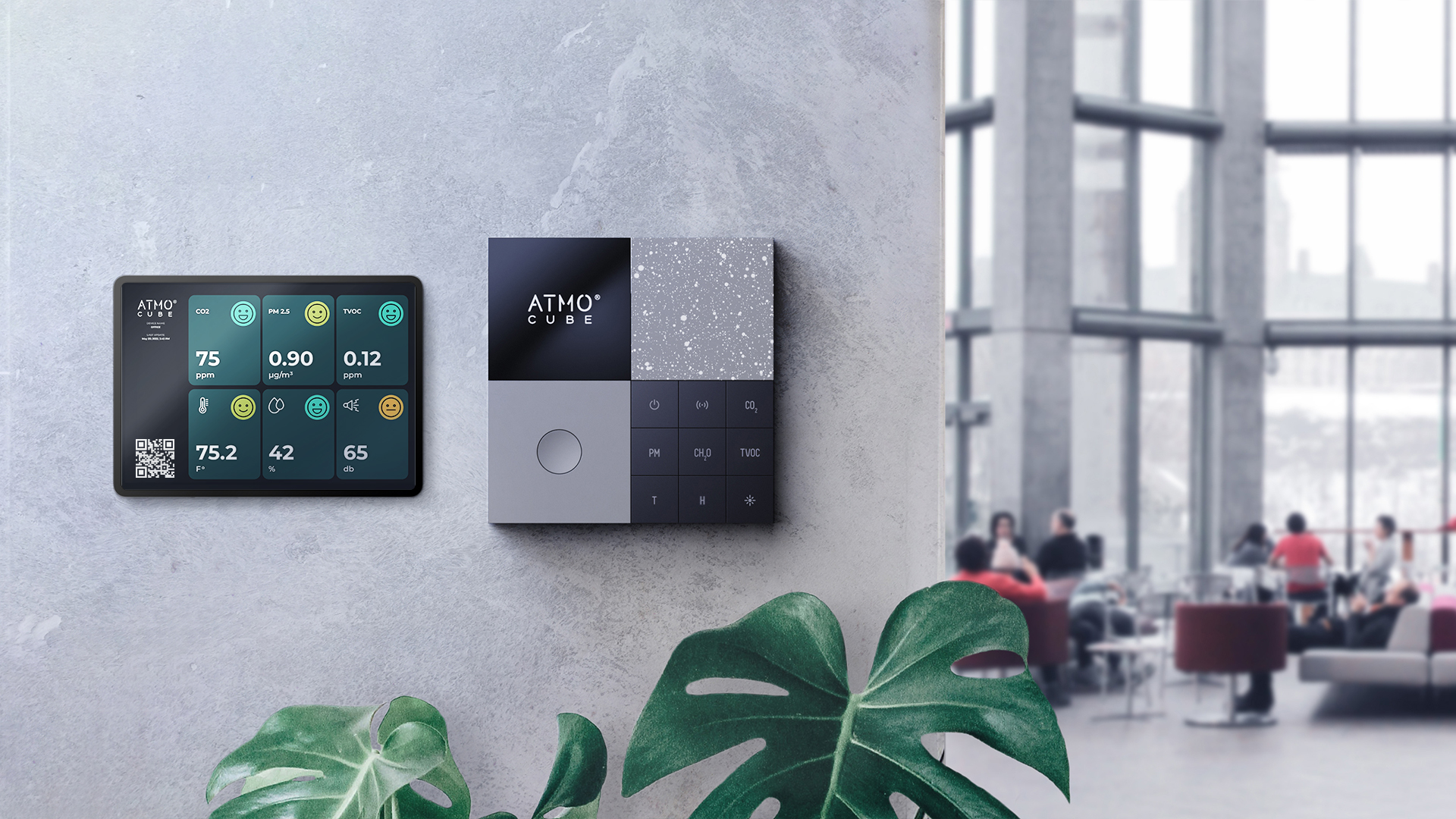
Atmocube air quality monitor on an office wall next to a tablet showing live readings
In short

Indoor air quality monitoring is the continuous measurement of pollutants and comfort conditions inside a building with professional sensors. In the UAE the readings that matter most are PM2.5 and PM10 (dust and fine particles), CO₂ (fresh air), TVOC and formaldehyde (chemicals from furnishings and cleaning), and temperature and humidity (comfort and mould risk).

Parameters

What we measure

Each reading is compared with Dubai Municipality guideline values for existing buildings.

35 µg/m³ (24 h)

PM2.5

Fine particles from dust storms, traffic, cooking, candles and incense. Small enough to reach deep into the lungs.

150 µg/m³ (24 h)

PM10

Coarser dust carried in from outside and stirred up by people, cleaning and air conditioning.

800 ppm (8 h)

CO₂

Shows whether a room gets enough fresh air for the people in it. High levels feel stuffy and tiring.

0.6 mg/m³ (8 h)

TVOC

Gases from paints, new furniture, cleaning products, perfumes and air fresheners.

0.01 ppm (8 h)

Formaldehyde

Released by pressed-wood furniture, cabinetry, adhesives and some insulation, especially when new.

20–60% RH

Humidity

Too high feeds mould and dust mites; too low dries eyes and skin.

22.5–25.5 °C

Temperature

Comfort affects how people feel and how they report air quality.

IEQ

Light and noise

Part of indoor environmental quality (IEQ), measured by Atmocube for a complete picture.

Limits: Dubai Municipality, Technical Guidelines for Indoor Air Quality for Healthy Life, DM-HSD-GU119-IAQ, Tables 2 and 3. Formaldehyde, light and noise depend on the monitor model.

Services

Two ways to monitor

Two-week IEQ assessment

A complete snapshot of a home or building. We install monitors in the key rooms, inspect the HVAC system, collect two weeks of data and walk you through a written report with recommendations.

  • Consultation and site visit
  • HVAC inspection
  • Analysis against Dubai Municipality and WHO values
  • Report and follow-up recommendations

Year-round monitoring (IEQ Management Plan)

Permanent sensors with 24/7 data, live dashboards and alerts, a yearly HVAC inspection and quarterly reports that show improvements over time. For offices, schools, hospitals, hotels and certified buildings.

  • 24/7 data and alerts
  • Quarterly reports
  • Dashboards for staff and occupants
  • Data for WELL, LEED, RESET and ESG

Brands

Monitors we install

HawaQ is an official Kaiterra partner in the UAE and the exclusive Atmocube distributor for the GCC.
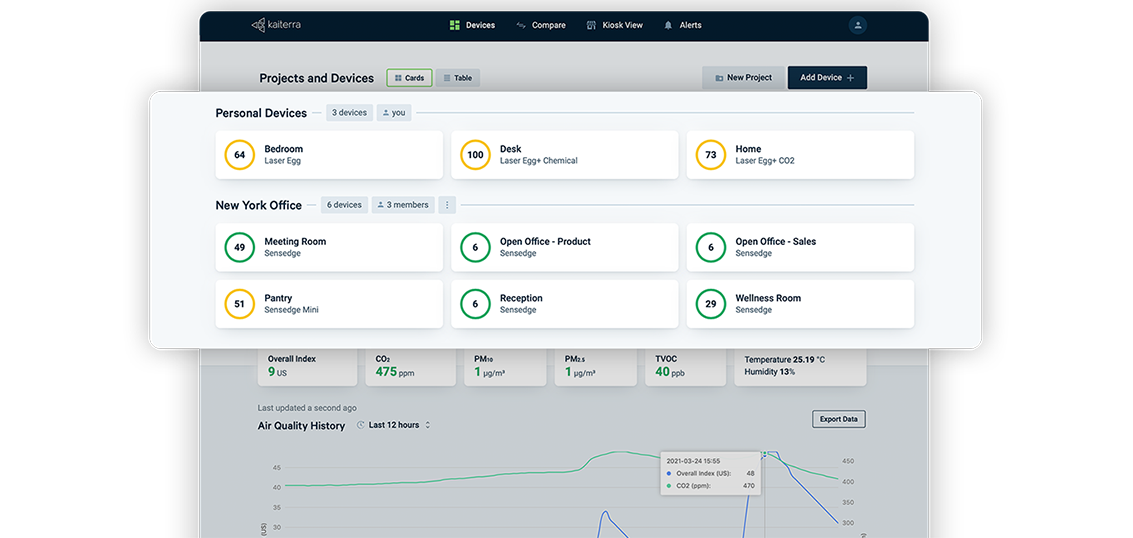
Kaiterra air quality dashboard showing readings from several rooms
Official partner in the UAE

Kaiterra

Sensedge, Sensedge Mini and Sensedge Go monitors for PM2.5, PM10, TVOC, CO₂, temperature and humidity, with BACnet, Modbus and an open API.

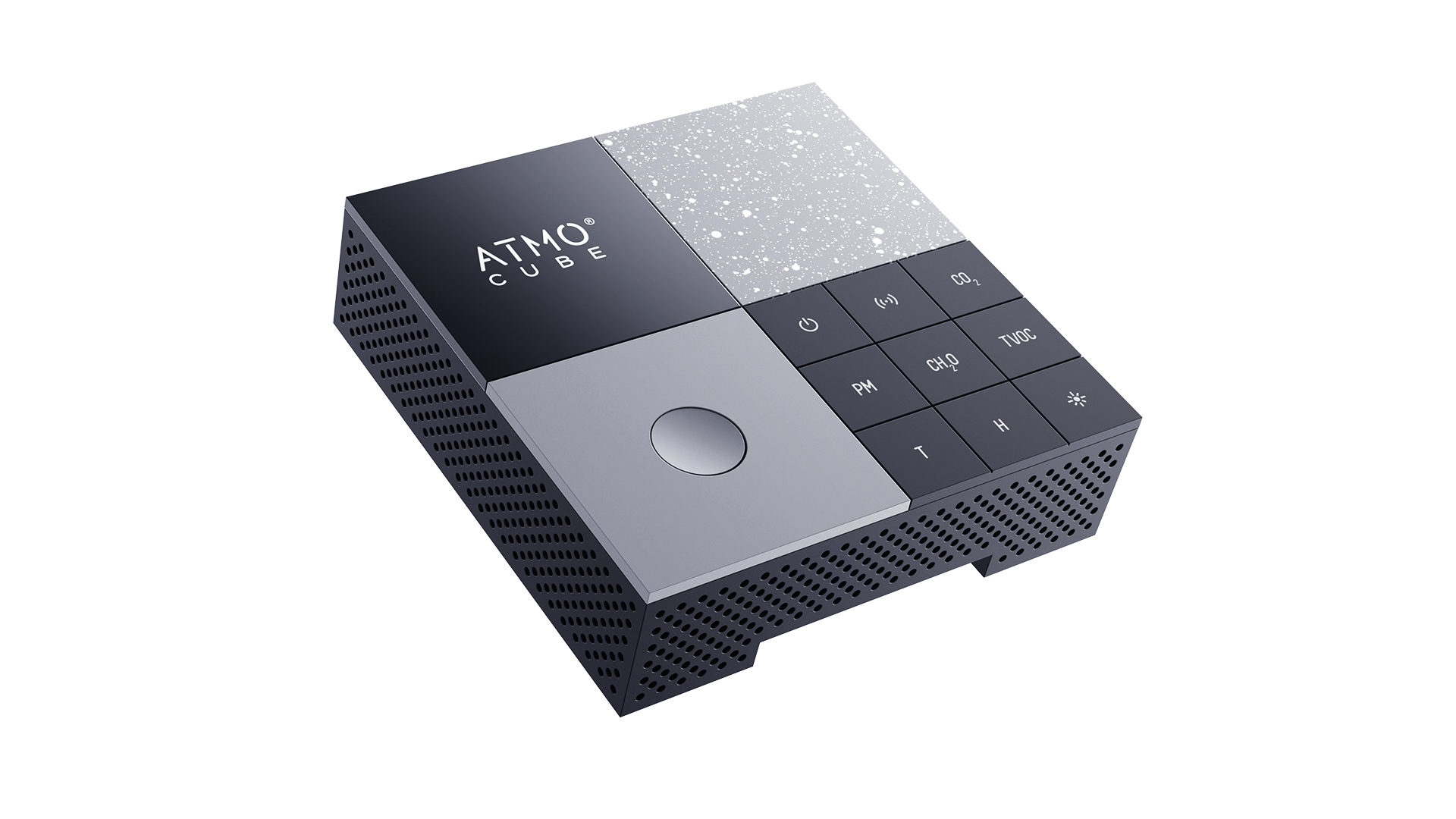
Atmocube indoor air quality monitor
Exclusive GCC distributor

Atmocube

Compact commercial monitor by Atmotech (US) for up to 11 parameters, including PM1, PM2.5, PM10, CO₂, TVOC, formaldehyde, light and noise.
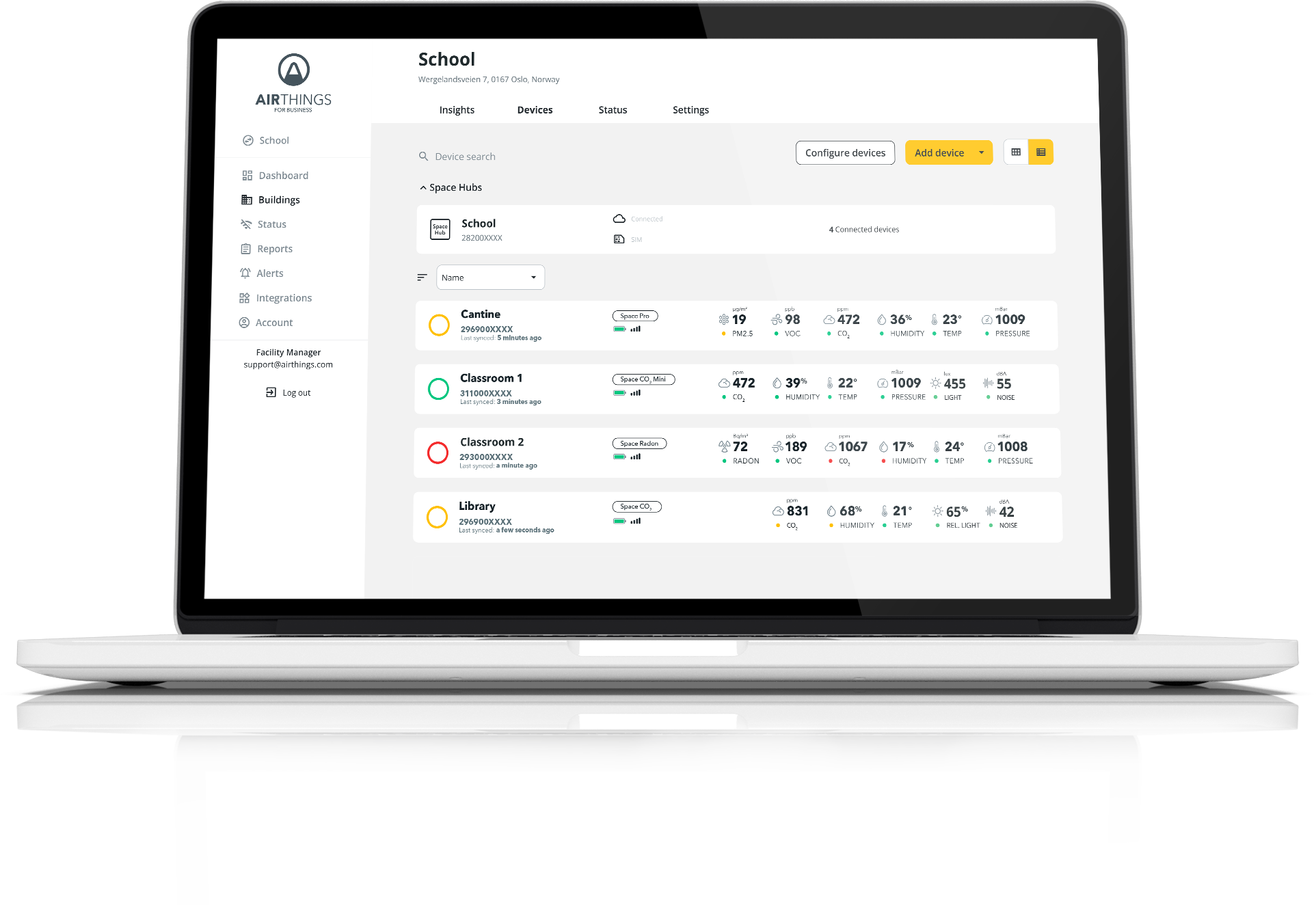
Airthings business dashboard on a laptop

Airthings

Air quality monitors with a business dashboard, tracking radon, particles, CO₂, VOCs, humidity and temperature.

Integration

Air quality data your building can act on

Monitors connect to building management systems, so ventilation can respond to real occupancy and air quality instead of fixed schedules. That saves energy when rooms are empty and protects air quality when they are full.

  • Kaiterra Sensedge: BACnet/IP, Modbus, MQTT and an open API
  • Atmocube: MQTT and Modbus, with BACnet through a gateway
  • Live dashboards and screens for occupants
  • Exports for audits and certification
Kaiterra dashboard listing air quality readings for several rooms

Process

How a monitoring project runs

  1. Plan

    We agree the rooms, the number of monitors and where each one goes, following RESET and WELL placement rules.

  2. Install

    Monitors are mounted, connected and checked. Nothing is drilled until placement is agreed.

  3. Report

    You see live data from day one, and a written analysis at the end of the assessment or every quarter.

  4. Act

    If the air falls short, we recommend the matching fix and verify the result with the same sensors.

FAQ

Indoor air quality monitoring: common questions

Have another question? Ask our team

How long should indoor air quality be monitored?

For an assessment, at least one to two weeks, so the data covers weekdays, weekends and air-conditioning cycles. Buildings that need to prove air quality to occupants, tenants or certification bodies monitor permanently, with live dashboards and quarterly reports.

Where should an indoor air quality monitor be installed?

In the rooms people use most, in the breathing zone. The RESET Air standard asks for the centre of the monitor to sit 0.9–1.8 m above the floor and at least 5 m from operable windows and fresh-air diffusers. Placement is planned per room during setup.

Can air quality monitors connect to our building management system?

Yes. Kaiterra Sensedge monitors support BACnet/IP, Modbus, MQTT and an open API. Atmocube supports MQTT and Modbus, with BACnet through a gateway. Facility teams can use the data to control ventilation by real occupancy and air quality.

Is continuous monitoring the same as a Dubai Municipality IAQ test?

No. A Dubai Municipality indoor air quality certificate needs testing by an EIAC-accredited laboratory. Continuous monitoring shows how the air behaves every day between those tests, so problems are found and fixed early.

Which monitor is right for my building?

For offices, schools, hospitals and certified buildings we usually recommend Kaiterra Sensedge or Atmocube, which log data to a dashboard and integrate with building systems. For a home, a two-week assessment is normally enough to find the problem.

What happens if monitoring finds a problem?

We explain the cause and recommend the fix that matches it: HEPA purification for particles, ventilation changes for CO₂, dehumidification for humidity, or UV-C where microbes are a concern. Then we monitor again to prove the improvement.

Start with a measurement

Tell us about your building and we’ll propose the right monitors and the rooms to measure.